
Quick answer
Reunion Island's whale season runs June to October and peaks from July to September, when humpback whales gather off the sheltered west coast. Sightings are possible from shore at no cost, though licensed boat tours get you closer. Timing is weather-dependent: calm morning seas offer the clearest view, and no season guarantees an encounter.
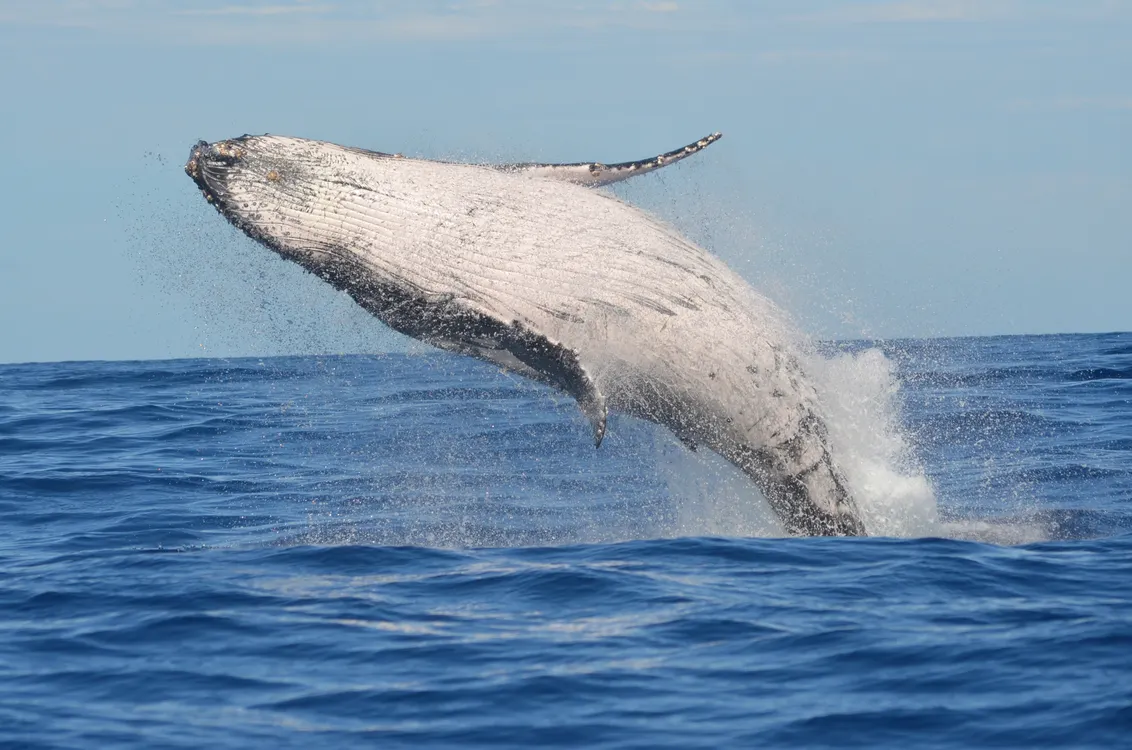
Each austral winter, humpback whales leave the cold feeding grounds off Antarctica and swim north across the Indian Ocean toward warmer coastal waters. Their destination includes the sheltered west coast of Reunion Island, where the reunion island whale season begins as ocean temperatures drop below the surface warmth the animals seek. These are Megaptera novaeangliae, some measuring fifteen metres, and many arrive as mothers escorting newborn calves. The migration is not random. It follows a predictable thermal rhythm, which is why the window falls reliably across the austral winter and early spring. The whales treat the island's coastal shelf as a resting and nursing station rather than a feeding ground, so they linger in calm bays close to shore. Observers on land regularly catch the tall vertical blow, a raised pectoral fin, or the full breach that sends a forty-tonne body clear of the water. This proximity is what makes whale watching in Reunion unusual: the drama often unfolds within sight of the shoreline, no boat required. Understanding the calendar helps a visitor set expectations. Sightings build gradually, reach a dependable peak, then taper as the animals turn south again with their calves grown strong enough for the return journey. Planning around that arc matters more than any single date. Morning outings tend to reward patience, when the sea sits flat and a distant spout is easy to read against the horizon. Weather, swell and luck still play their part, and no operator can promise an encounter. For anyone mapping a trip, the humpback whale migration near Reunion rewards flexibility: a few days in the window beat a single fixed morning. Shore viewing along the west coast costs nothing, while licensed boat excursions bring visitors closer under strict approach limits. The island's official tourism board publishes current guidance, and the site's booking pages gather the vetted operators, with departure points and dates set out in one place. Treated as a planning tool rather than a guarantee, a clear reunion island whale season guide turns a hopeful glance at the ocean into a trip built around the months when the odds genuinely favour the patient watcher.
“The drama often unfolds within sight of the shoreline, no boat required.”
The Peak Calendar for Reunion Island Whale Season
The optimal window to observe humpback whales along the West Coast of Reunion Island is from mid-August to mid-September. Planning excursions during the recommended arrival window of 07:00–11:00 offers the calmest seas and best morning visibility.
June to July
Low to moderate visitor numbersCool austral winter, 20°C to 24°C
Humpback whales begin arriving from Antarctica to breed. Sightings are frequent but can be brief as whales remain highly mobile.
Mid-August to Mid-September
Highest demand of the seasonDry winter days, 18°C to 23°C
This is the peak migration period with the highest concentration of mothers and calves. Active behaviors like breaches and tail slaps are regularly observed near the surface.
Late September to October
Moderate crowds, declining steadilyWarm spring transition, 22°C to 26°C
Mature whales begin their southward migration, leaving mostly mothers and growing calves in the sheltered coastal waters. Sightings remain steady but require more patience.
Weekday mornings
Fewer boats on the water—
Selecting early hours between 07:00 and 11:00 provides the calmest ocean conditions. Visibility is optimal before afternoon winds pick up and disrupt the surface.
Verdict: Schedule a weekday morning excursion between 07:00 and 11:00 from mid-August to mid-September for the highest frequency of sightings and optimal sea conditions.
Daily Hours and Quietude Rules During Reunion Island Whale Season
Shore-based observation is accessible 24 hours a day, seven days a week, along the coast. However, strictly regulated quietude periods apply to all vessel-based activities to protect migrating marine mammals.
| Monday | 00:00–23:59 | Quietude rules apply |
|---|---|---|
| Tuesday | 00:00–23:59 | Quietude rules apply |
| Wednesday | 00:00–23:59 | Quietude rules apply |
| Thursday | 00:00–23:59 | Quietude rules apply |
| Friday | 00:00–23:59 | Quietude rules apply |
| Saturday | 00:00–23:59 | Quietude rules apply |
| Sunday | 00:00–23:59 | Quietude rules apply |
These quietude hours are enforced throughout the official migration season to minimize disturbance, though shore lookout spots are accessible at any hour of the day or night.
Costs and Tour Fees for Reunion Island Whale Season
Observing migrating humpback whales from the coast of Reunion Island is completely free. Visitors choosing guided boat excursions or in-water swim tours will pay fees depending on the vessel type and activity duration.
A typical adult pays 30 EUR for a basic boat observation cruise, though choosing an in-water snorkeling excursion increases the price to around 130 EUR.
How to Reach the West Coast During Reunion Island Whale Season
The West Coast of Reunion Island, the main hub for whale watching, is easily accessed from the capital city, Saint-Denis, and the primary airport. Visitors can travel south along the coastal corridor via public buses or rental cars.
Car Jaune Line T from Roland Garros Airport to Saint-Gilles-les-Bains stop
Car Jaune Line O2 from Gare de Saint-Denis to Filaos Saint-Gilles stop
N1 highway (Route des Tamarins) south from Saint-Denis to Saint-Gilles-les-Bains
Roland Garros Airport taxi rank to Saint-Gilles-les-Bains marina
Best Coastal Viewpoints for Humpback Whale Sightings
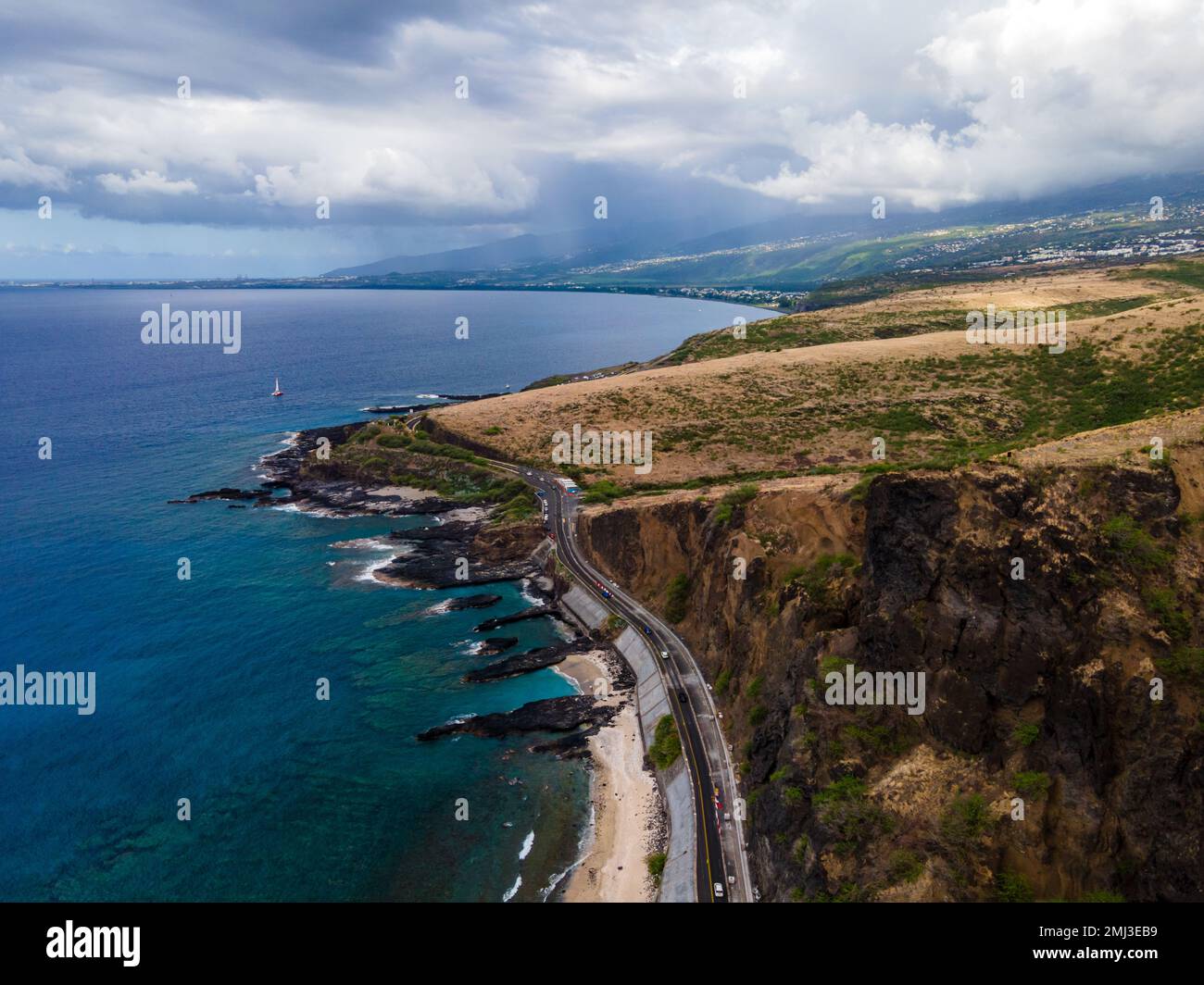
Cap La Houssaye
Position yourself on the rocky cliffs overlooking the bay to capture wide-angle shots of humpback whales blowouts against the volcanic basalt backdrop. Access is directly via the roadside parking area on the N1 route.
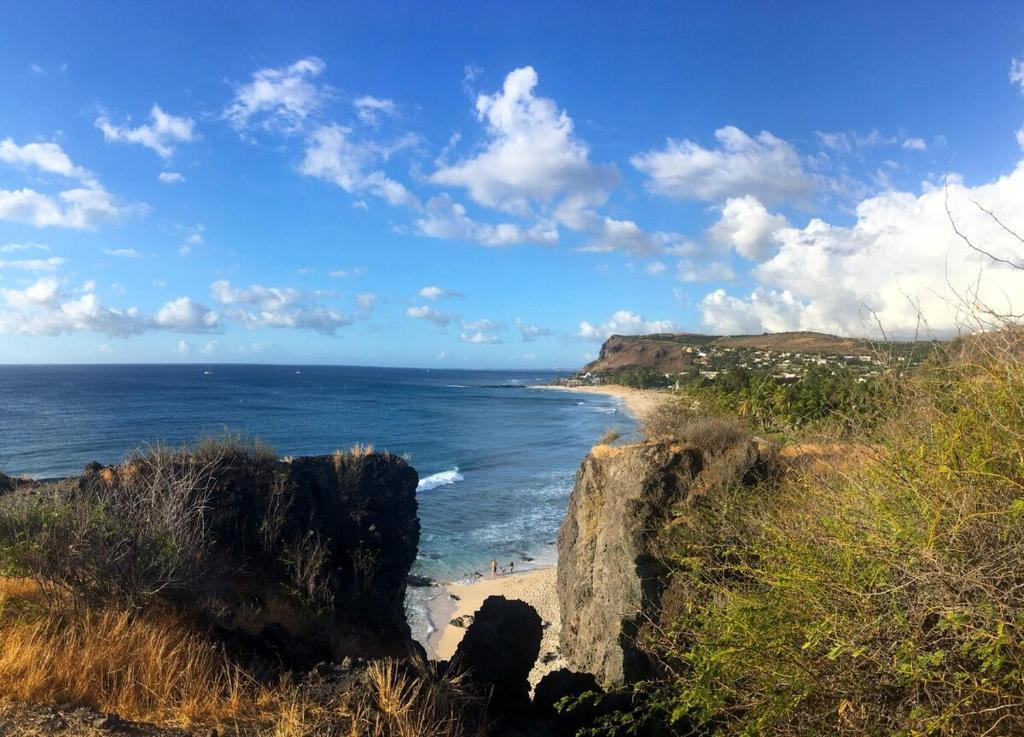
Boucan Canot Coastal Trail
Walk the elevated dirt path connecting Boucan Canot and Saint-Gilles to frame active breaching whales from a high vantage point. The trail starts near the public beach parking lot and features safety barriers along the edge.
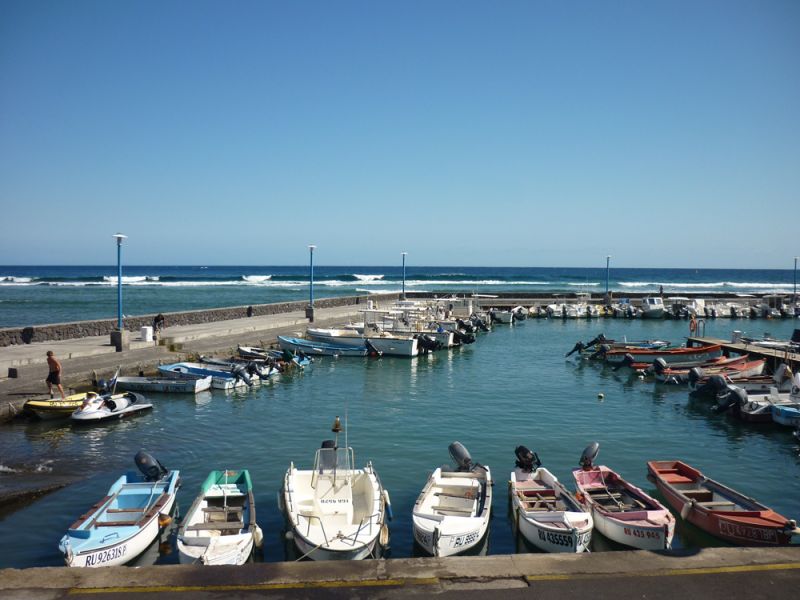
Saint-Leu Port Jetty
Shoot from the stone jetty looking out toward the deeper ocean channels where whales navigate close to the lagoon boundary. Walk to the end of the flat concrete pier for unobstructed 360-degree marine horizons.
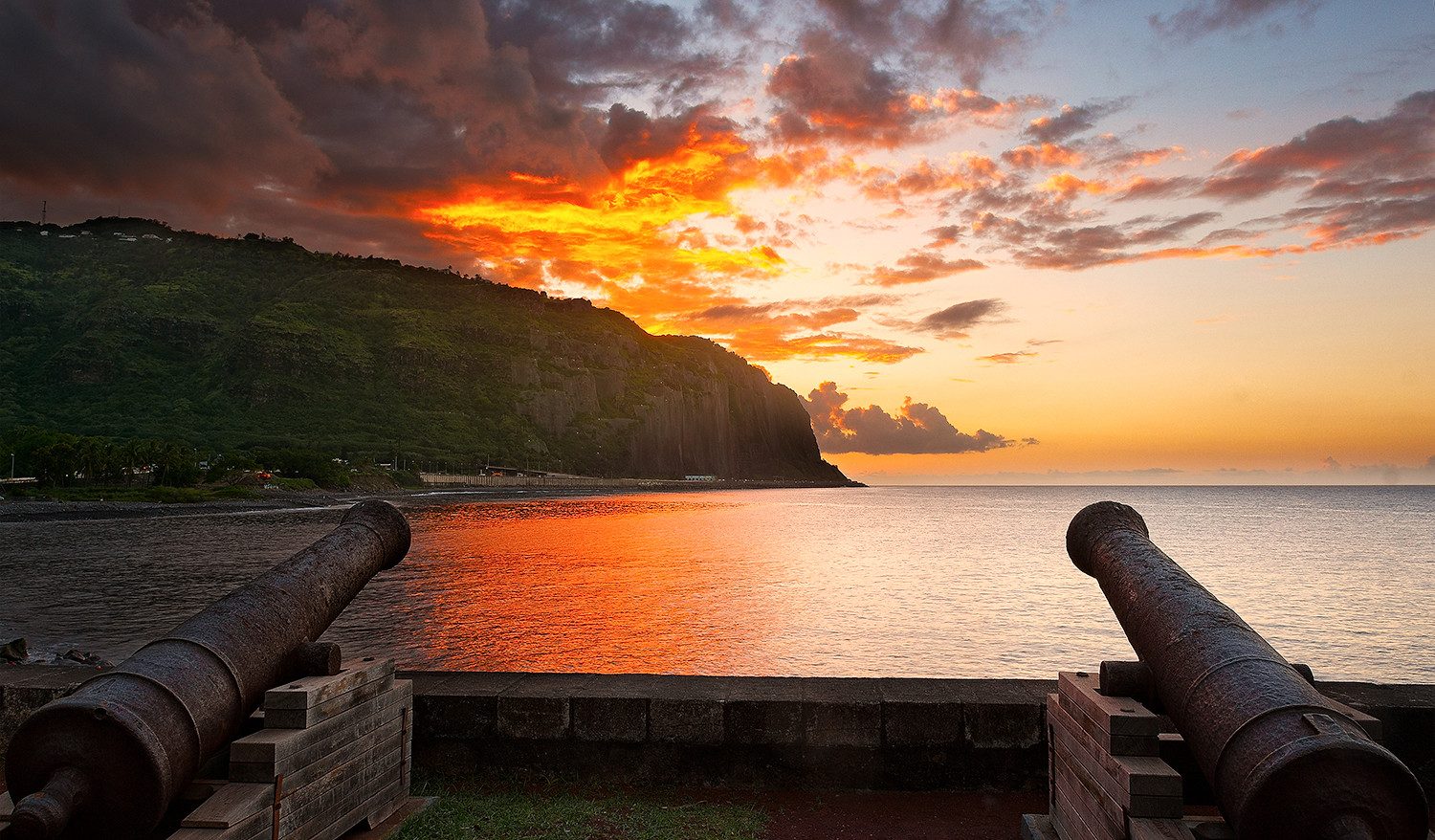
Le Barachois Seafront
Set up your tripod along the historic seafront promenade in Saint-Denis to photograph whales migrating past the northern coast. Use the vintage canons in the foreground to anchor your composition of the open sea.
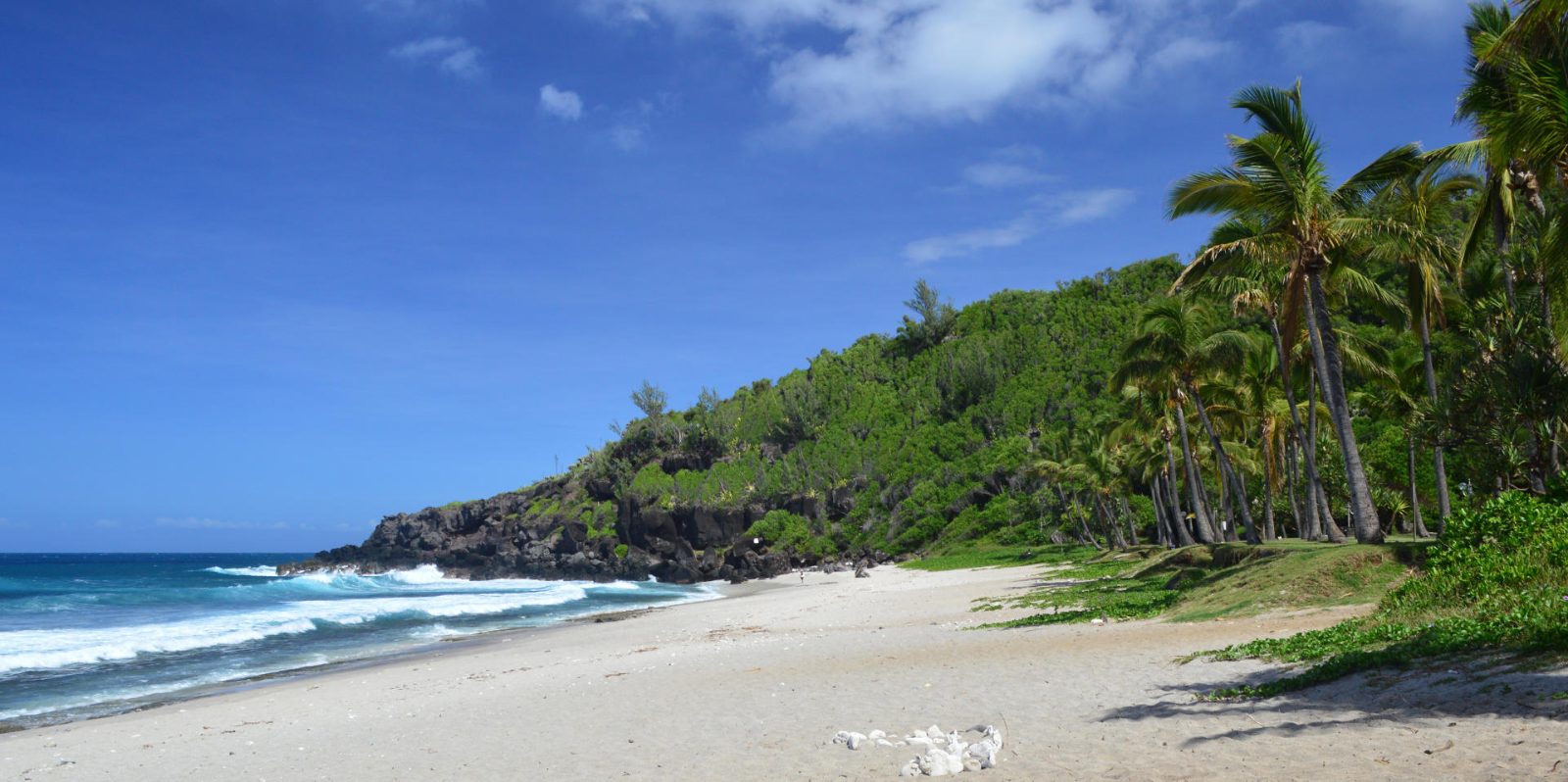
Grande Anse Viewpoint
Climb the short footpath up Piton Grande Anse to capture the south coast swell where whales often shelter. Frame your shot using the coconut palms and volcanic cliffs bordering the white-sand cove below.
Strict Approach Regulations and Swim Charters
Whale approaches off Reunion's West Coast follow the Quiétude charter, a voluntary code protecting migrating humpbacks from disturbance. Respecting it keeps both animals and observers safe.
Do
- Keep boats at least 100 meters from any whale
- Limit observation to a maximum of 30 minutes
- Approach slowly from the side, never head-on
- Let the whale set the distance and pace
- Choose Quiétude-certified operators when booking a tour
- Enter the water calmly and only with guides
Don't
- Don't cross the 100-meter boat approach limit
- Don't chase, encircle, or cut off a whale's path
- Don't swim toward or touch the animals
- Don't linger beyond the 30-minute observation window
- Don't use flash or drones near surfacing whales
- Don't make sudden engine noise or wake
Essential Packing Gear for Your Ocean Outing
Pack these items in the weeks and days before your West Coast outing, ordered from early prep to the morning you head out.
-
Reserve your boat tour early — Peak austral winter dates fill fast, so confirm a spot on the site's booking pages ahead of time.
-
Carry photo ID for check-in — Operators verify names against the reservation before boarding.
-
Pack binoculars — Blows and surface activity are often spotted well before the boat reaches them.
-
Bring reef-safe sunscreen — The morning sun over open water is strong even when the air feels cool.
-
Add warm windproof layers — The austral winter breeze on deck runs colder than on shore.
-
Take motion sickness medication — Dose an hour before departure since swells build on open water.
-
Charge camera and phone the night before — A full battery covers the whole outing without a mid-trip cutoff.
-
Fill a refillable water bottle — Hours on deck in sun and wind dehydrate you faster than expected.
Check availability
FAQ: Reunion Island Whale Season Planning & Logistics
Everything you need to know about reunion island whale season